
Disguised Alpha   /   Compound references. Original research.
GLP-1 SMResearch reference

Incretin biology / Research reference

GLP-1 SMUnderstand the pathway.

GLP-1 SM is a Disguised Alpha catalog name for GLP-1 receptor pathway research. This reference introduces the receptor biology behind that research area and explains how to read the evidence. A catalog abbreviation alone does not identify a molecule or establish that a commercial material matches the compound used in a paper.

Receptor biology · Catalog identity requires verification

A focused reference from the Disguised Alpha research network.

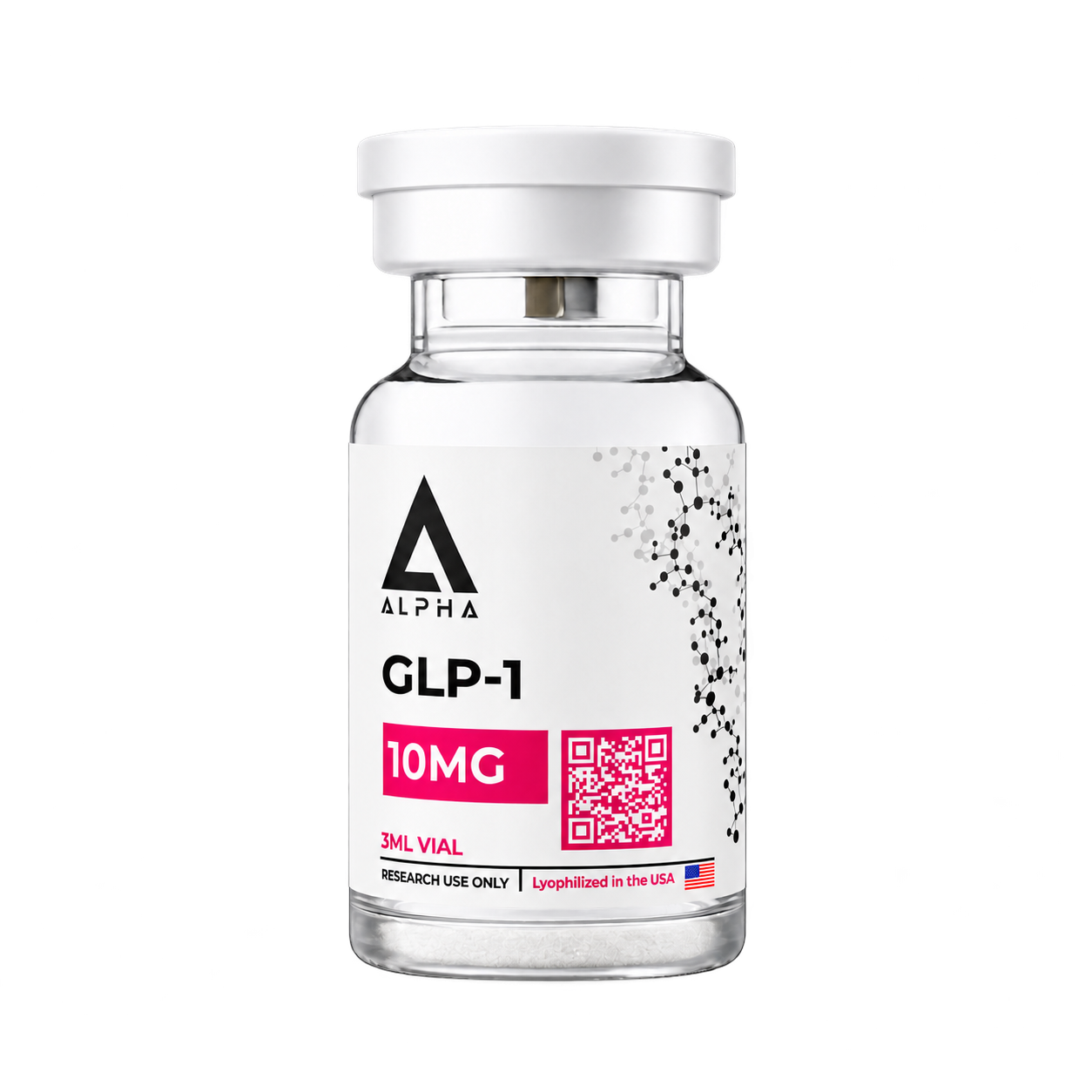
Disguised Alpha GLP-1 SM product reference image
GLP-1 SMCatalog imagery · RUO
Catalog label
GLP-1 SM
Research context
GLP-1 receptor signaling
Source models
Receptor & cell studies

01 / The science

Understand the research focus.

A clear starting point for the mechanisms, experimental models and questions behind the compound.

01

A receptor with a defined identity

Early cloning studies isolated a GLP-1 receptor from a rat pancreatic-islet library. In transfected cells, ligand binding was coupled to activation of adenylate cyclase. This establishes receptor biology in an experimental system, rather than the identity of a present-day catalog product.

Read the primary source ↗
02

Binding is one part of signaling

Work on the human GLP-1 receptor linked receptor activation to cAMP production. An agonist and an antagonist could bind the same receptor yet produce different functional results. Receptor binding and downstream activity are therefore distinct measurements.

Read the primary source ↗
03

Read the experimental system

A human-receptor study in transfected COS-7 cells examined cAMP and intracellular calcium responses. A human receptor expressed in a cell preparation is laboratory evidence; it is not a human clinical trial or proof of clinical outcomes.

Read the primary source ↗

02 / Read with context

Know what the evidence can tell you.

The selected sources explain GLP-1 receptor biology. They do not establish the identity, activity, safety or clinical suitability of GLP-1 SM. Published findings should be applied only after the actual material and formulation have been matched to the study.

Start with three questions.
01What was tested?
Check the exact molecule, sequence, composition and formulation.
02Where was it tested?
Cells, animals and clinical populations answer different questions.
03What was measured?
A pathway signal is different from a demonstrated clinical outcome.

03 / Selected publications

Go straight to the source.

Original records, study models and the limits that matter when interpreting a result.

STUDY 01 · 1992
Rat islet cDNA and transfected COS cells

Cloning the pancreatic GLP-1 receptor

Researchers identified a receptor that bound GLP-1 and coupled to adenylate cyclase. Related peptide hormones did not share its binding behavior in that preparation.

Reading limit: This paper identifies and characterizes a receptor. It does not test GLP-1 SM.

↗
STUDY 02 · 1993
Human-islet cDNA; transfected fibroblasts

Human receptor agonism and antagonism

Exendin-4 acted as an agonist at the cloned human receptor, while exendin-(9–39) inhibited GLP-1-driven cAMP production. Binding affinity alone did not determine the functional response.

Reading limit: The ligands and cell system in this paper are defined experimental materials, separate from a supplier catalog label.

↗
STUDY 03 · 1993
Human receptor expressed in COS-7 cells

Multiple intracellular signaling pathways

GLP-1 stimulation increased intracellular cAMP and produced a calcium response in the receptor-expressing preparation. The work examined how receptor structure relates to signaling.

Reading limit: Cell-signaling results cannot establish clinical efficacy, safety or formulation equivalence.

↗

A focused selection, not a systematic review. These are pathway-background references, not studies of GLP-1 SM.

Explore research & source notes →

04 / Common questions

A little more clarity.

Quick answers for reading the science behind GLP-1 SM.

Is GLP-1 SM the name used in these studies?

No. GLP-1 SM is the catalog label covered by this guide. The selected papers investigate GLP-1 receptor biology and identify their own ligands and experimental systems.

Does the abbreviation establish a particular drug identity?

No. Identity should be established from the named molecule, sequence or structure, and batch documentation. This guide does not equate a shorthand label with a prescription medicine.

What does an agonist do?

An agonist activates a receptor-dependent response in the tested system. An antagonist can inhibit that response. Neither label alone specifies what occurs in a whole organism.

Can receptor studies validate a finished formulation?

No. The exact identity, composition and analytical documentation of the material need their own review. A receptor paper is background science, not a certificate for a product.

Continue your research

One compound. A wider research library.

Explore the complete GLP-1 SM profile and related compounds in the Disguised Peptides research hub.

Open the full profile ↗